
Periodic table of returns
The periodic table of returns — also known as an asset allocation quilt (or the Callan chart) — ranks each asset class year by year. Each asset class is a colored tile that climbs or sinks in the yearly ranking; best performers rank first. Built from ETF total returns (dividends reinvested). Switch the trailing period to 3, 5, 10 or 15 years to rank by annualized returns and smooth out the year-to-year noise, or toggle the orientation if you prefer years across the top.
Methodology
Each asset class is proxied by a liquid ETF (shown in the legend). Annual total return uses the ETF's split- and dividend-adjusted year-end close versus the prior year-end. The most recent column is year-to-date and still moving. The table reaches back to 2000; a bucket only appears once its ETF has a full prior-year close, so earlier years show empty cells where a proxy didn't yet exist. The multi-year trailing views (3, 5, 10, 15) rank each class by its annualized return (CAGR) over that window, derived from the endpoint adjusted closes — true compounded returns, never averaged annual figures; a class appears only once its ETF has a full window of history. Past performance does not predict future returns; not investment advice.
FAQ
- What is an asset allocation quilt?
- An asset allocation quilt is a chart that ranks the annual total return of each major asset class — US large and small cap, international and emerging-market stocks, bonds, gold, REITs and commodities — for every year, stacking the best performer on top. Strategists call it a quilt because the colored, color-coded tiles weave together year over year, with no single asset class staying on top.
- Is the asset allocation quilt the same as the periodic table of returns?
- Yes. “Asset allocation quilt,” “periodic table of returns” and “Callan chart” (after Callan Associates, who popularized it) all refer to the same visualization: asset classes ranked by return, year by year.
- What does the asset allocation quilt show?
- It shows how unpredictable yearly performance is: last year’s leader is often near the bottom this year. That visual case for diversification is the whole point of the quilt — spreading across asset classes smooths the ride because the winners rotate.
More visualizations
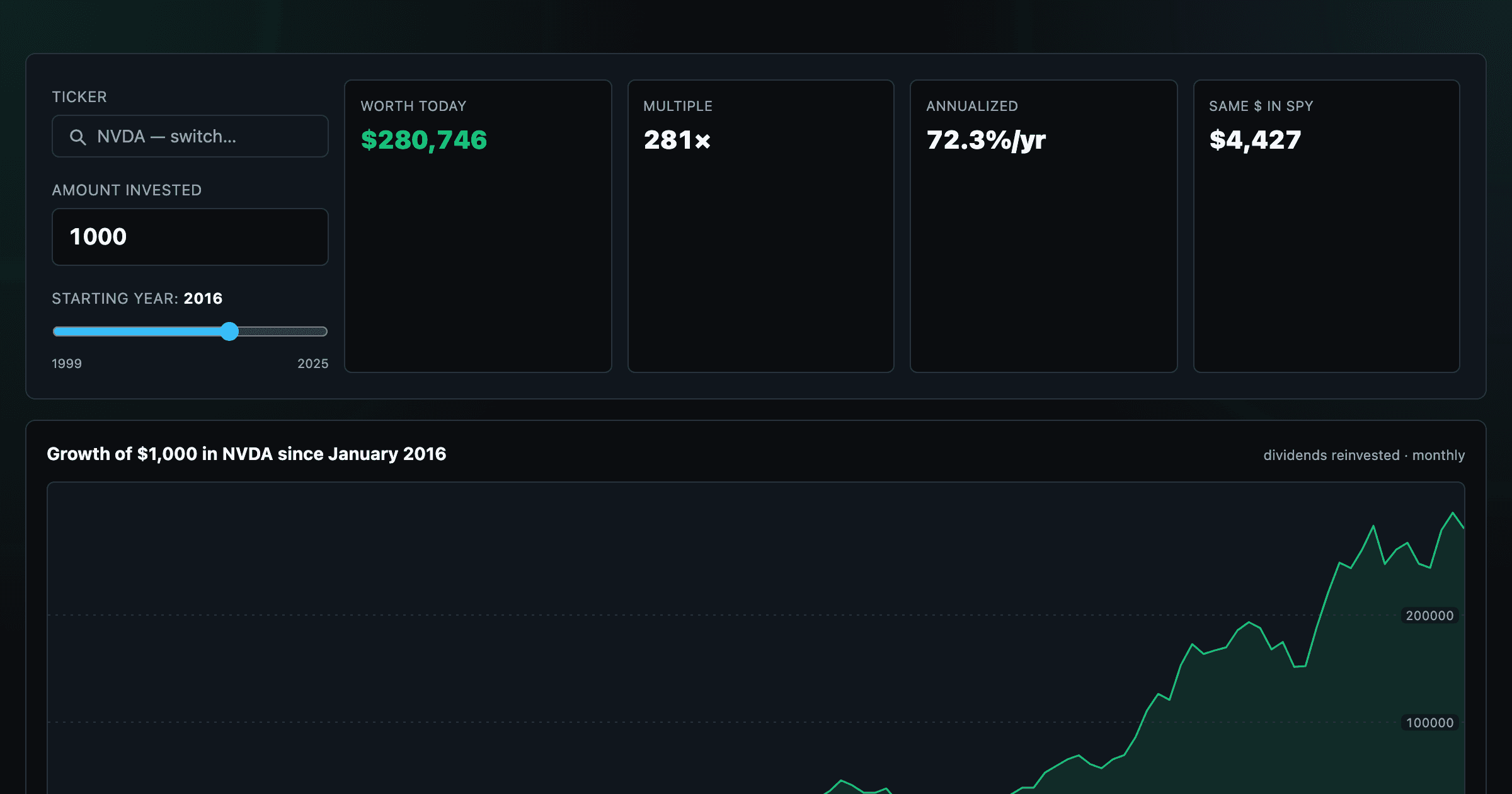
What $1,000 in any stock or ETF would be worth today.
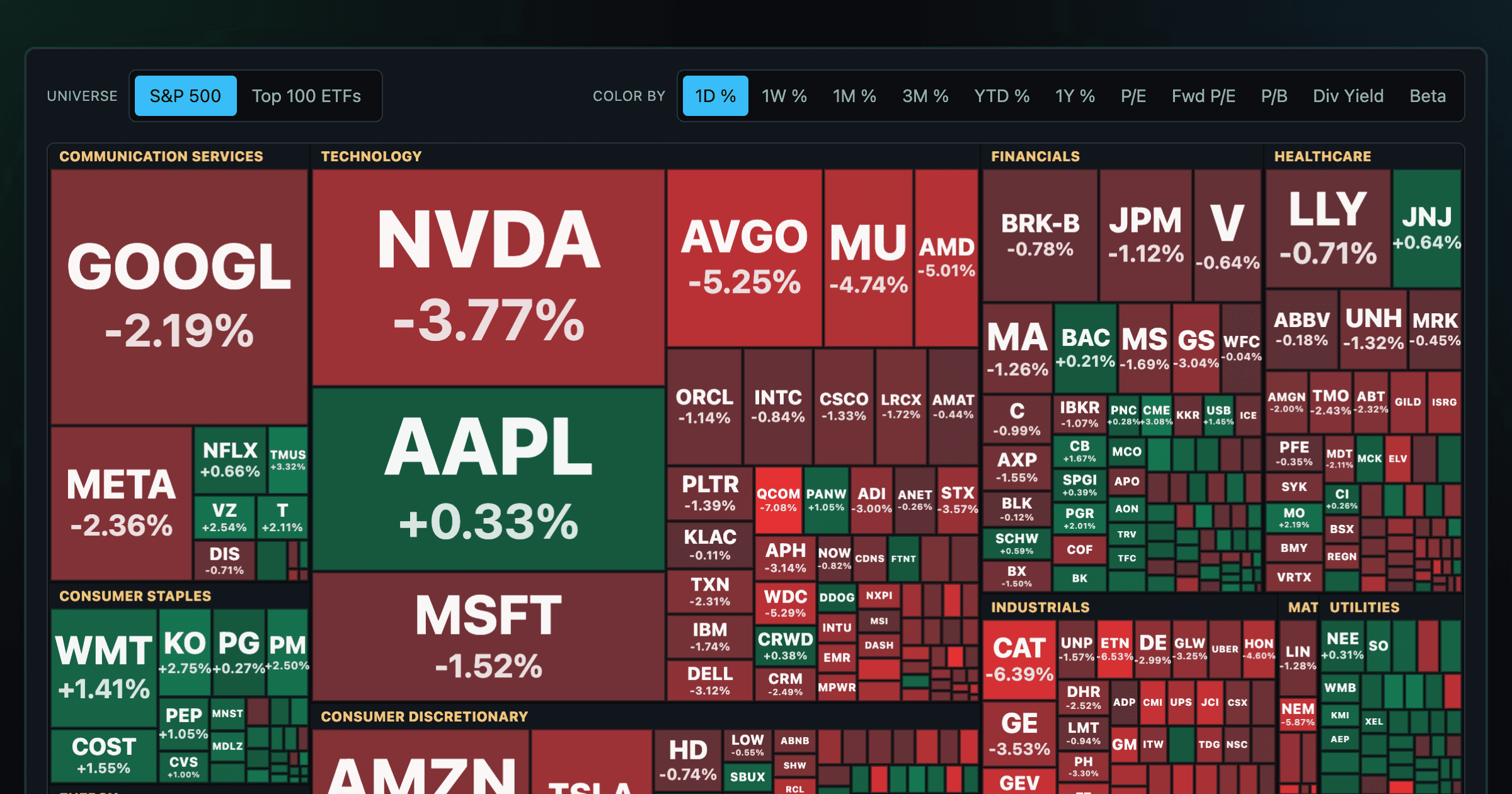
Every S&P 500 company sized by market cap — color by return or valuation.
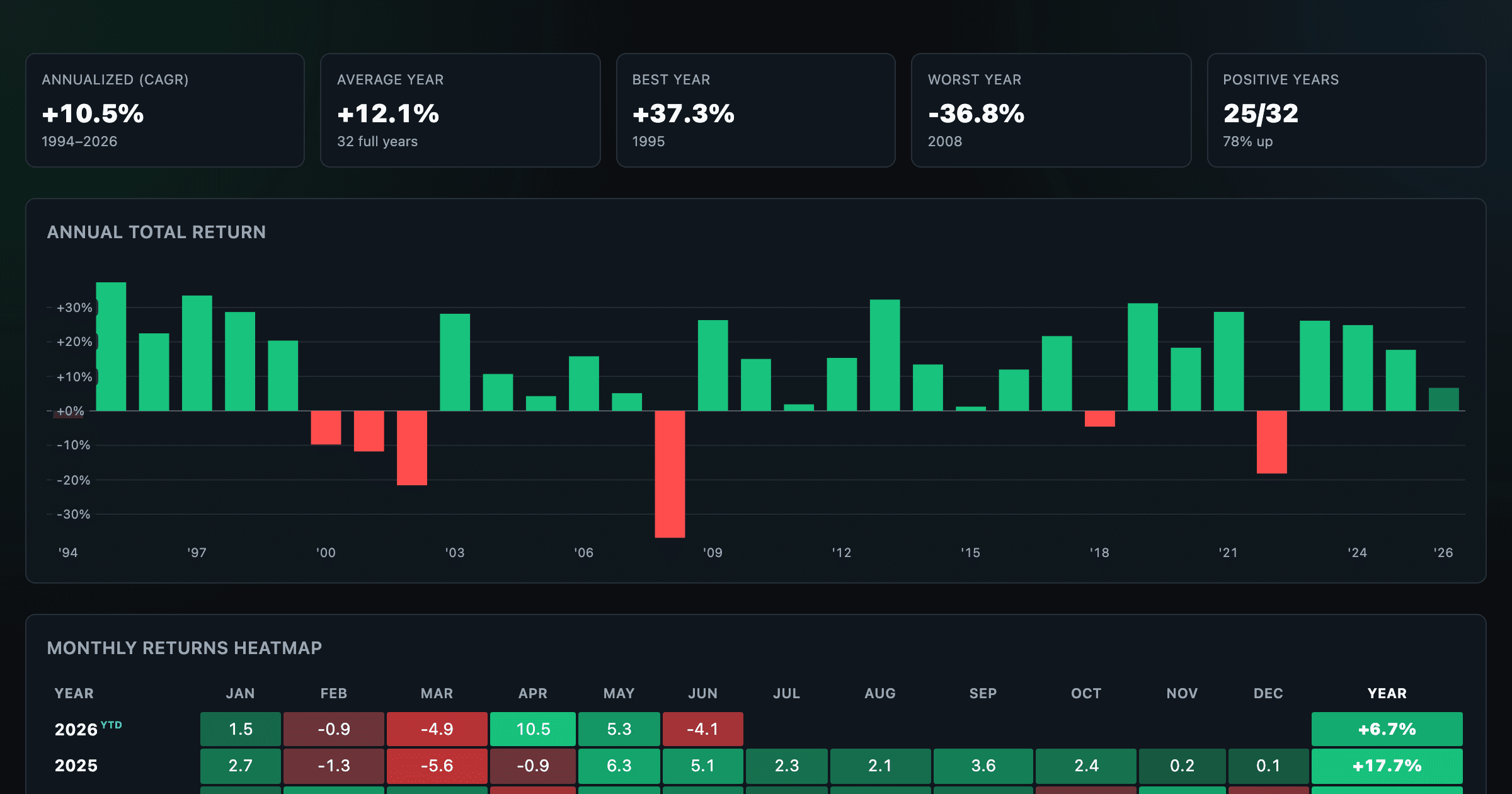
S&P 500 annual and monthly returns — every year, every month.
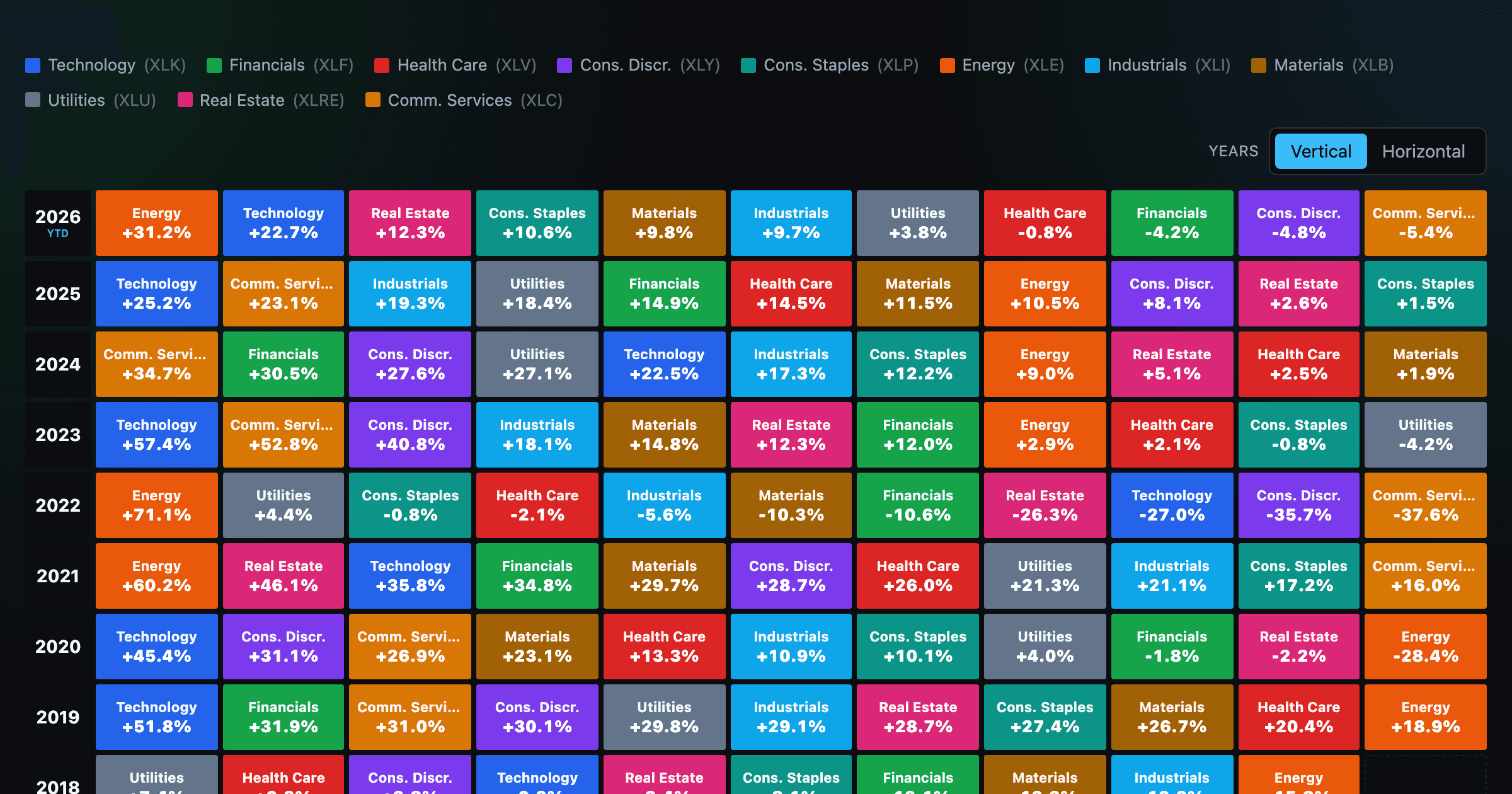
The 11 S&P 500 sectors ranked year by year — a sector quilt chart, back to 1999.
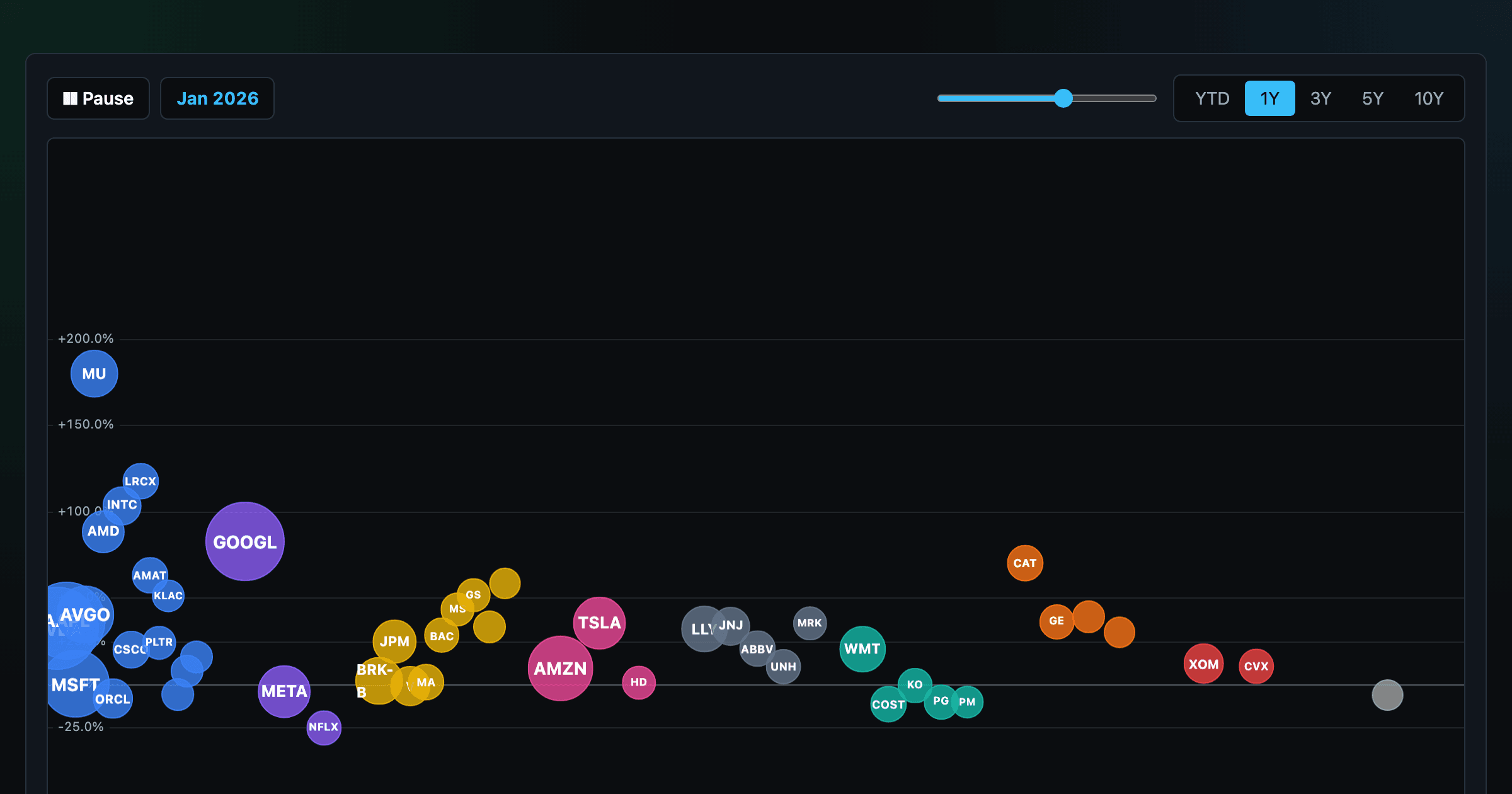
The biggest US companies as animated bubbles, rising and falling with their total return over time.
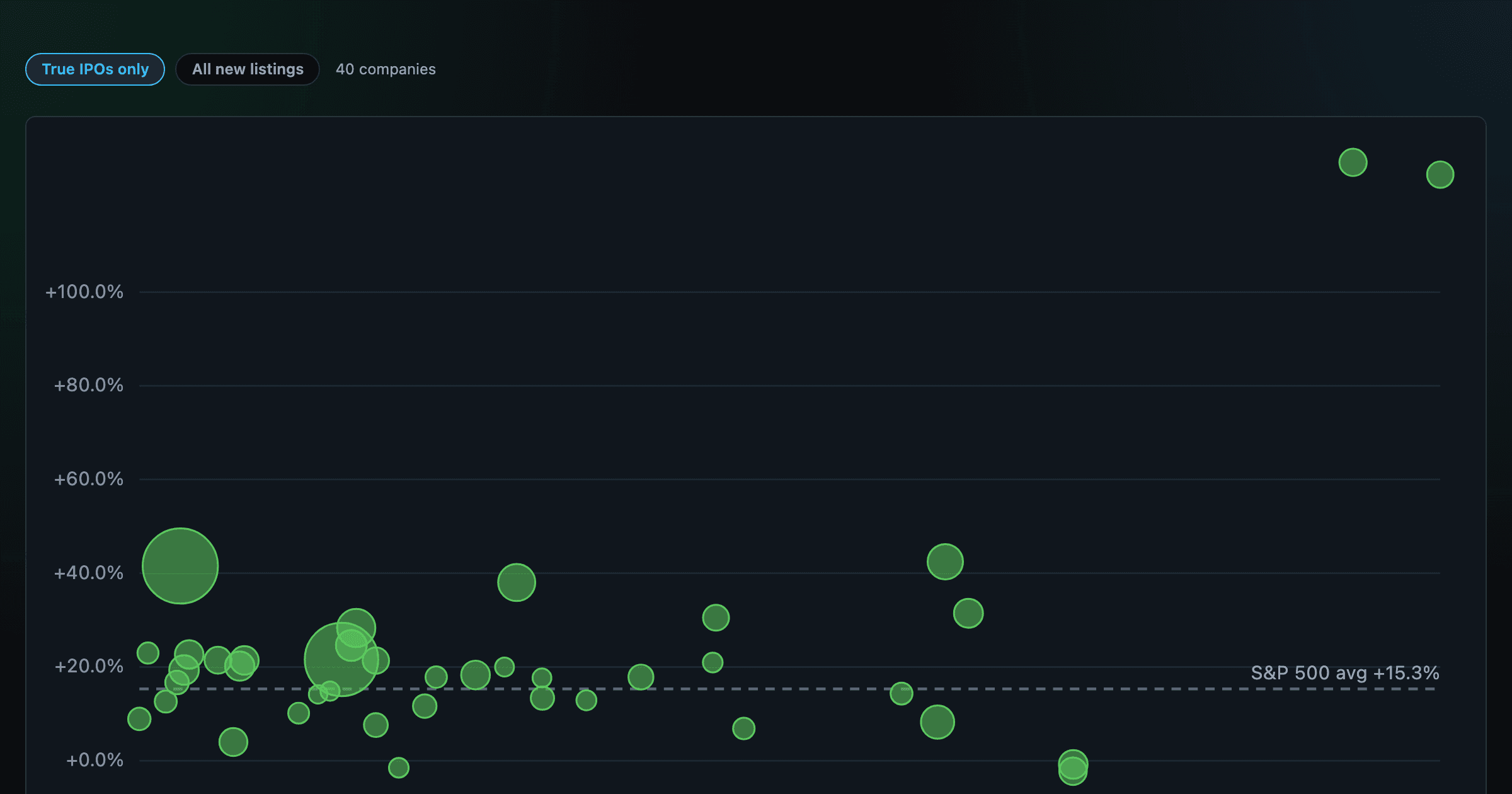
How recent stock-market debuts have performed since listing — annualized, vs the S&P 500, by IPO vs spin-off.
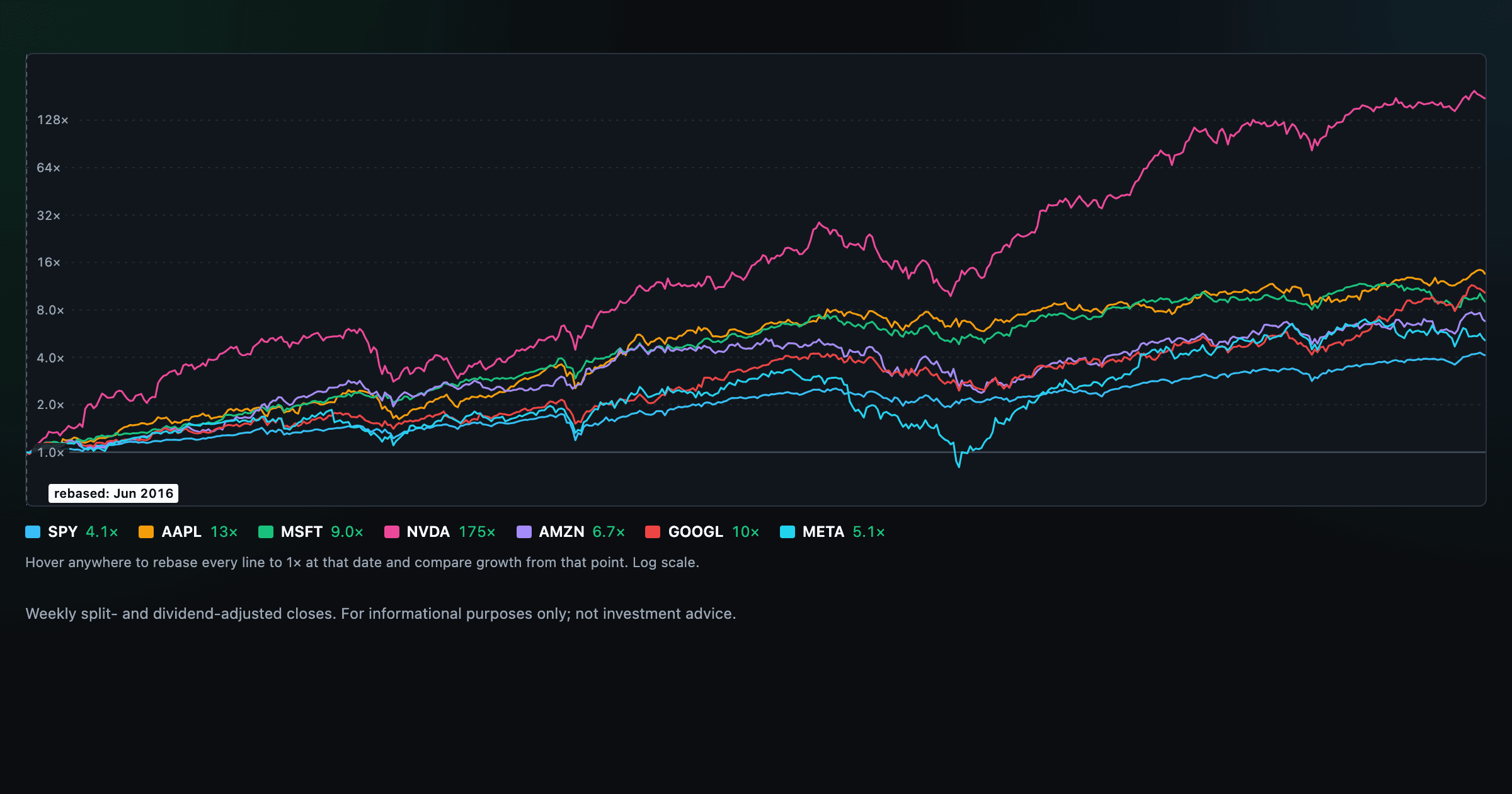
Compare megacaps vs the S&P 500, rebased to 1× at any date you hover.
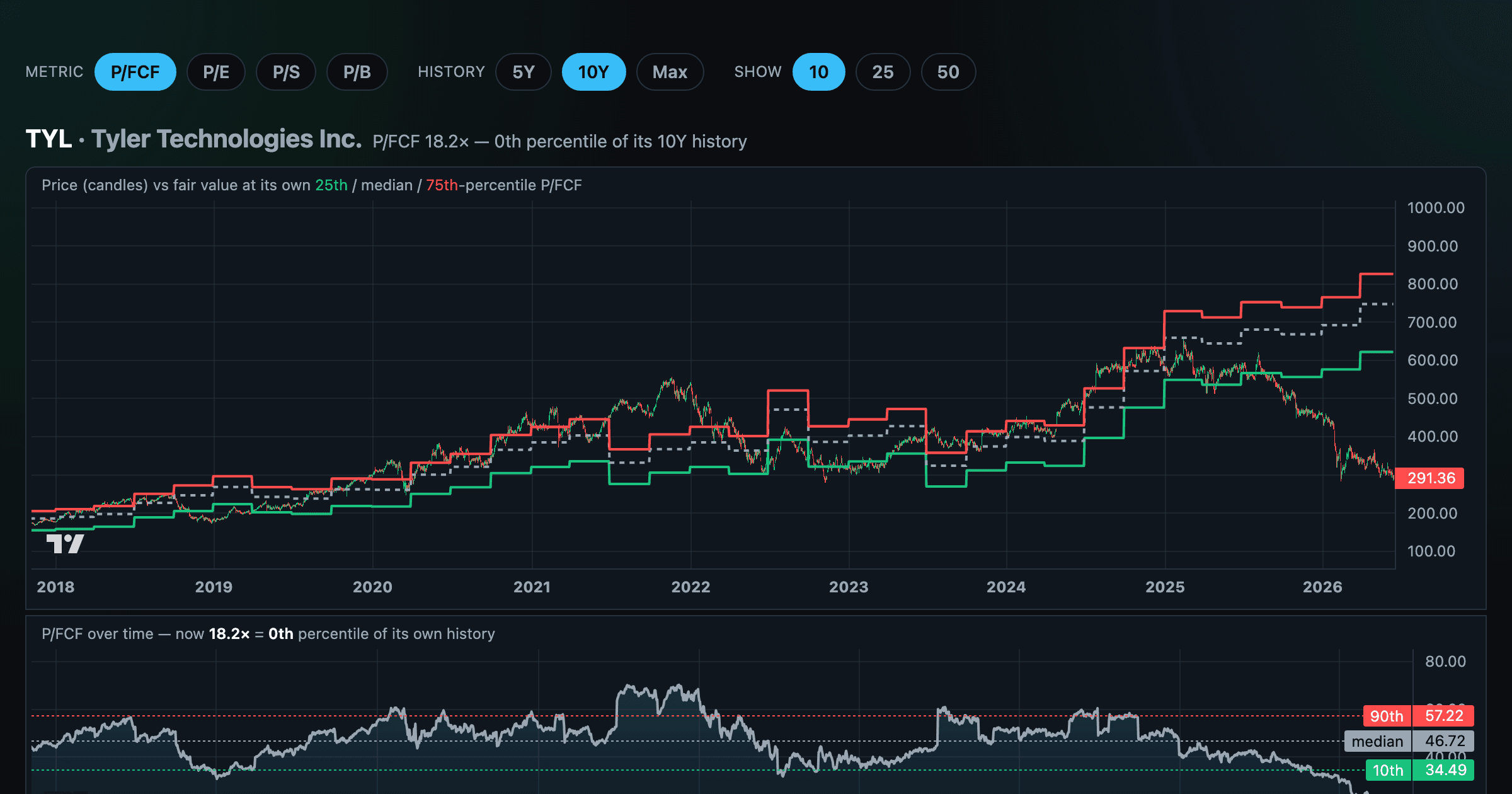
Stocks trading cheapest relative to their own P/E, P/FCF, P/S, or P/B history — with fair-value bands.
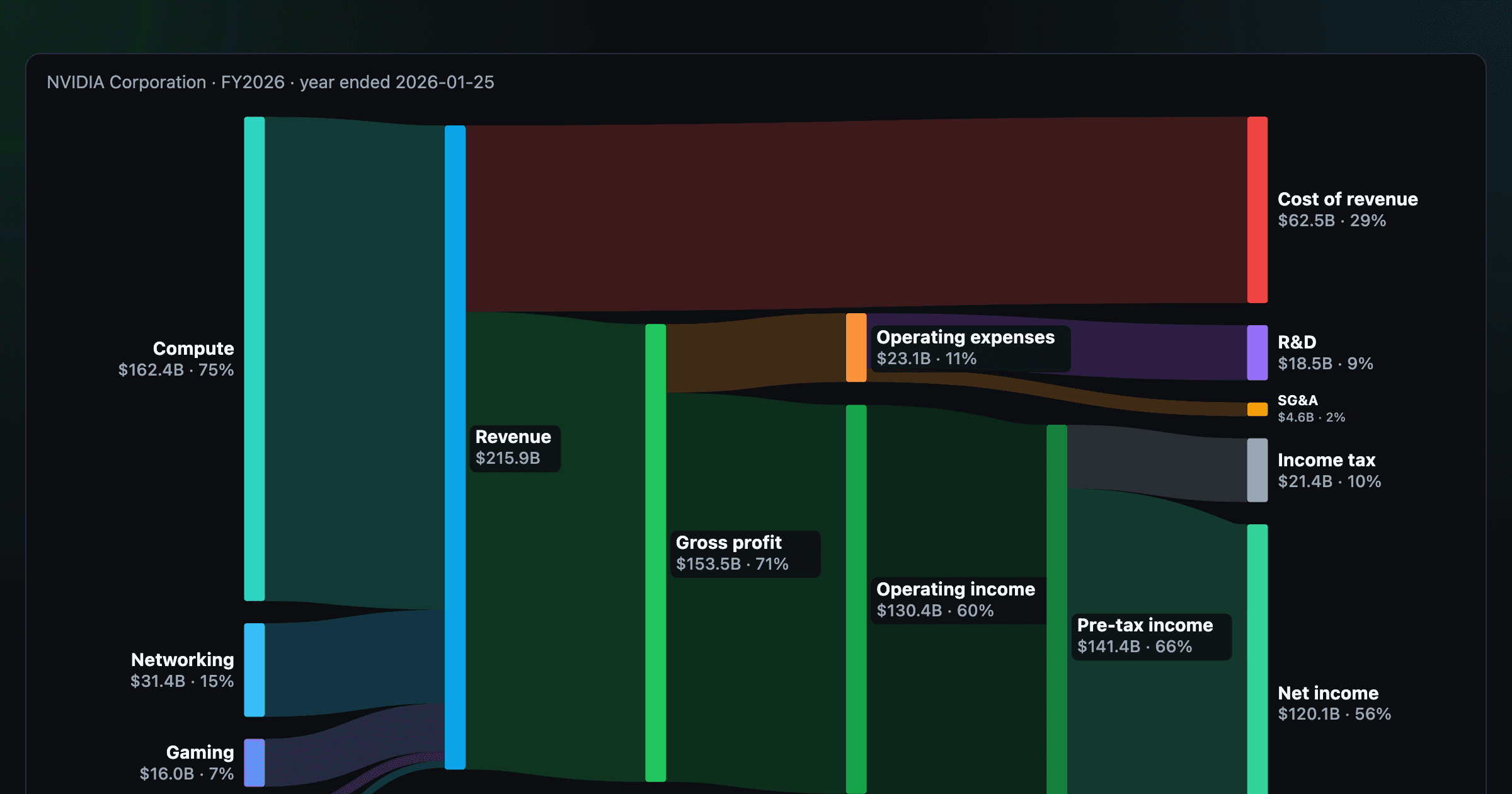
Follow a company's revenue through its income statement as a Sankey — costs, taxes, and profit.
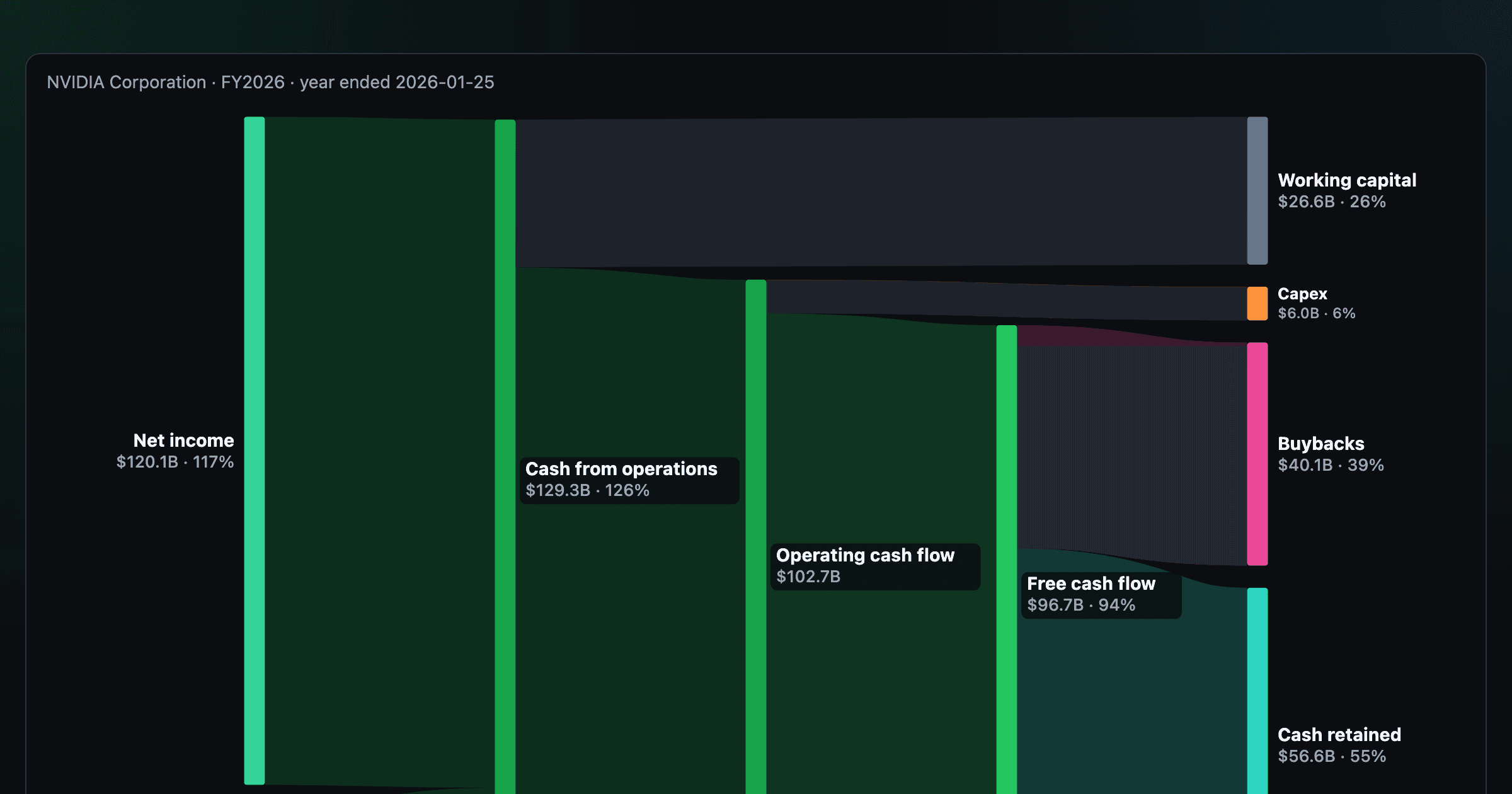
Follow a company's cash from net income through operating cash flow into capex, buybacks, and dividends.
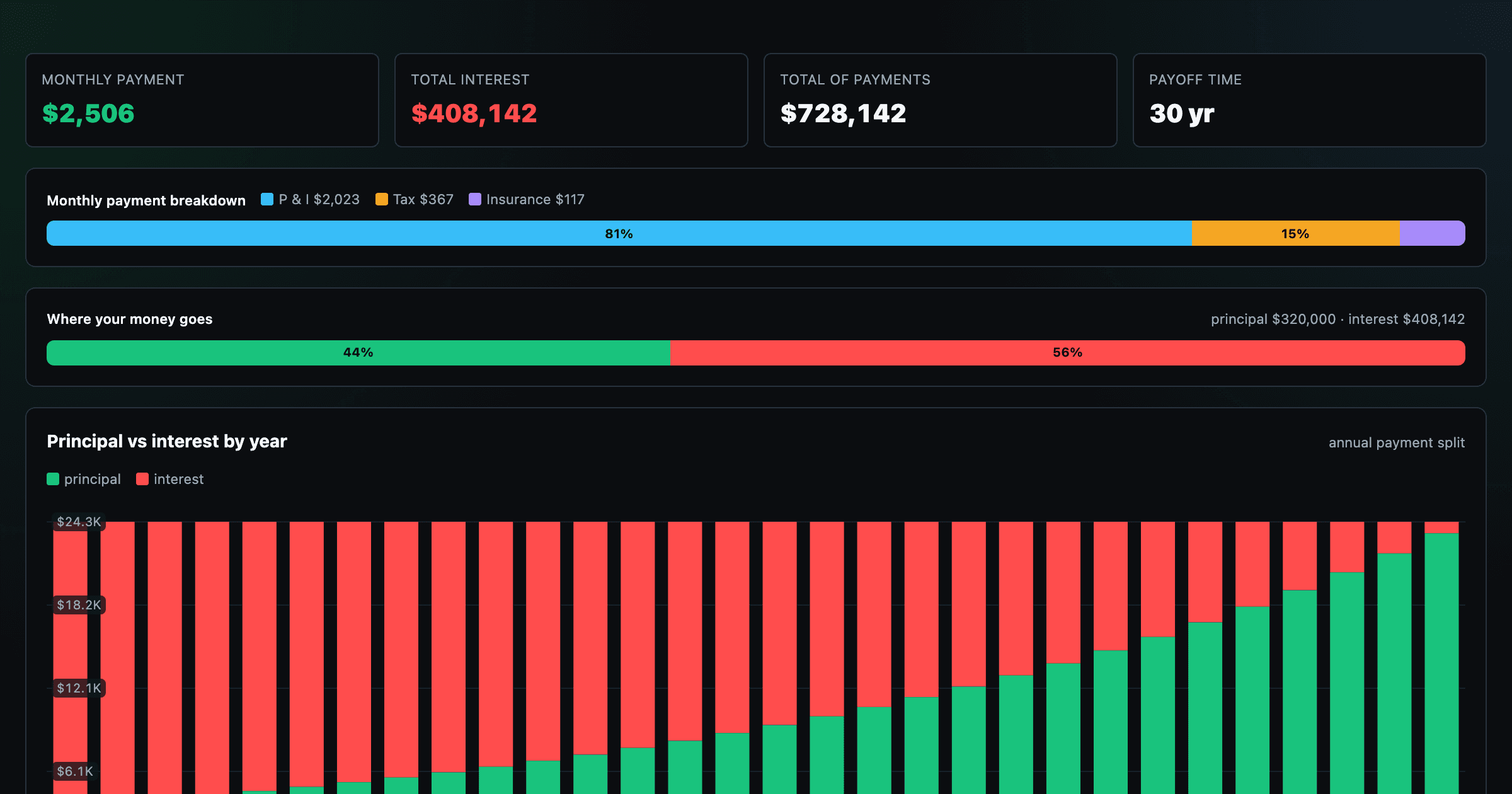
Monthly payment, principal vs interest by year, and the balance paydown — with extra-payment savings.
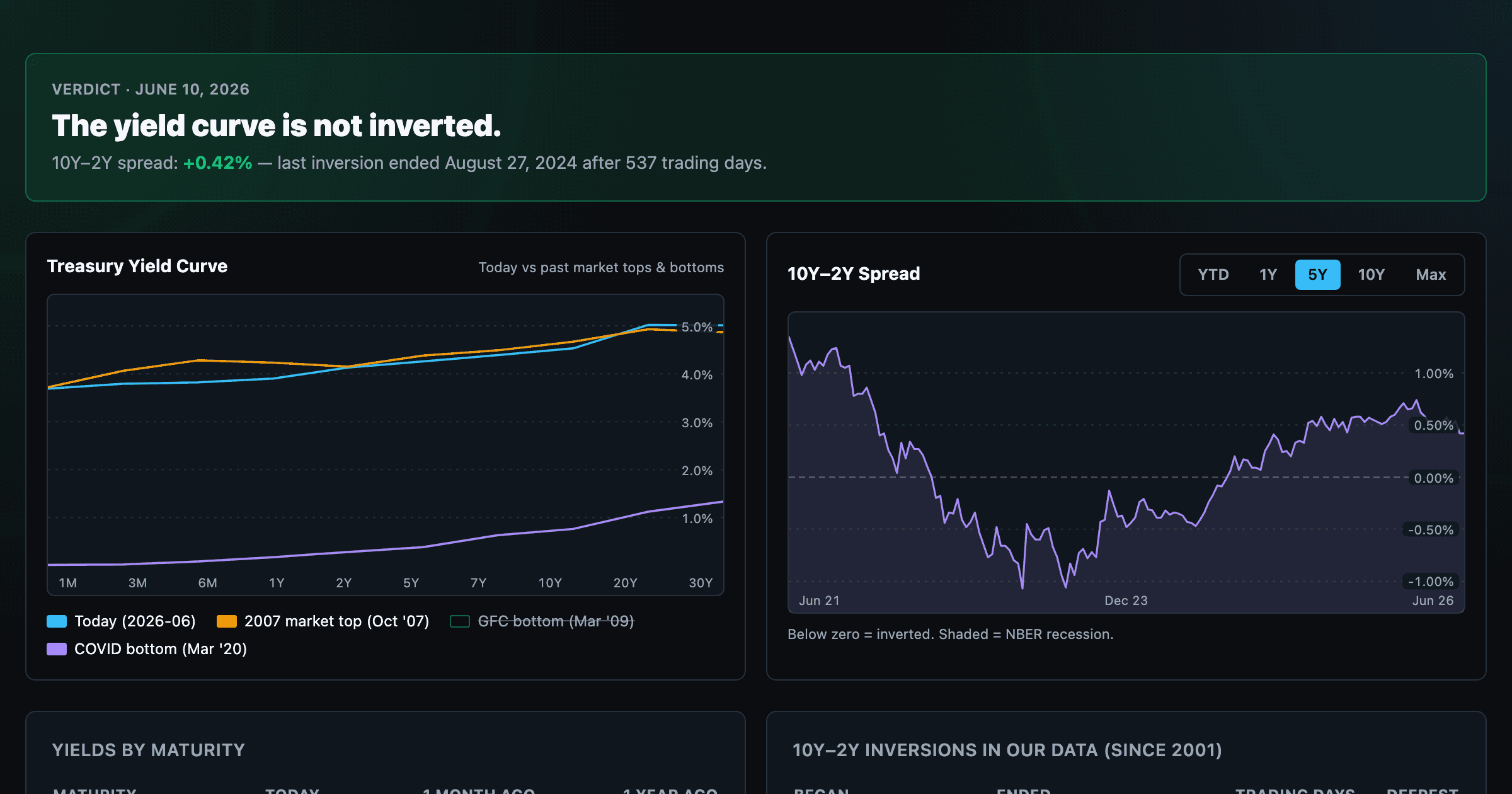
Live term structure, the 10Y–2Y spread, and every inversion episode.