
returns by year
Calendar-year, monthly and weekly total returns for the S&P 500 (proxied by SPY, dividends reinvested) since 1994. The most recent year is year-to-date.
Total return by period
Returns heatmap
| Year | Jan | Feb | Mar | Apr | May | Jun | Jul | Aug | Sep | Oct | Nov | Dec | Year |
|---|---|---|---|---|---|---|---|---|---|---|---|---|---|
| 2026YTD | 1.5 | -0.9 | -4.9 | 10.5 | 5.3 | -1.3 | +9.8% | ||||||
| 2025 | 2.7 | -1.3 | -5.6 | -0.9 | 6.3 | 5.1 | 2.3 | 2.1 | 3.6 | 2.4 | 0.2 | 0.1 | +17.7% |
| 2024 | 1.6 | 5.2 | 3.3 | -4.0 | 5.1 | 3.5 | 1.2 | 2.3 | 2.1 | -0.9 | 6.0 | -2.4 | +24.9% |
| 2023 | 6.3 | -2.5 | 3.7 | 1.6 | 0.5 | 6.5 | 3.3 | -1.6 | -4.7 | -2.2 | 9.1 | 4.6 | +26.2% |
| 2022 | -5.3 | -3.0 | 3.8 | -8.8 | 0.2 | -8.2 | 9.2 | -4.1 | -9.2 | 8.1 | 5.6 | -5.8 | -18.2% |
| 2021 | -1.0 | 2.8 | 4.5 | 5.3 | 0.7 | 2.2 | 2.4 | 3.0 | -4.7 | 7.0 | -0.8 | 4.6 | +28.7% |
| 2020 | -0.0 | -7.9 | -12.5 | 12.7 | 4.8 | 1.8 | 5.9 | 7.0 | -3.7 | -2.5 | 10.9 | 3.7 | +18.3% |
| 2019 | 8.0 | 3.2 | 1.8 | 4.1 | -6.4 | 7.0 | 1.5 | -1.7 | 1.9 | 2.2 | 3.6 | 2.9 | +31.2% |
| 2018 | 5.6 | -3.6 | -2.7 | 0.5 | 2.4 | 0.6 | 3.7 | 3.2 | 0.6 | -6.9 | 1.9 | -8.8 | -4.6% |
| 2017 | 1.8 | 3.9 | 0.1 | 1.0 | 1.4 | 0.6 | 2.1 | 0.3 | 2.0 | 2.4 | 3.1 | 1.2 | +21.7% |
| 2016 | -5.0 | -0.1 | 6.7 | 0.4 | 1.7 | 0.3 | 3.6 | 0.1 | 0.0 | -1.7 | 3.7 | 2.0 | +12.0% |
| 2015 | -3.0 | 5.6 | -1.6 | 1.0 | 1.3 | -2.0 | 2.3 | -6.1 | -2.6 | 8.5 | 0.4 | -1.7 | +1.2% |
| 2014 | -3.5 | 4.6 | 0.8 | 0.7 | 2.3 | 2.1 | -1.3 | 3.9 | -1.4 | 2.4 | 2.7 | -0.3 | +13.5% |
| 2013 | 5.1 | 1.3 | 3.8 | 1.9 | 2.4 | -1.3 | 5.2 | -3.0 | 3.2 | 4.6 | 3.0 | 2.6 | +32.3% |
| 2012 | 4.6 | 4.3 | 3.2 | -0.7 | -6.0 | 4.1 | 1.2 | 2.5 | 2.0 | -1.8 | 0.6 | 0.9 | +15.4% |
| 2011 | 2.3 | 3.5 | 0.0 | 2.9 | -1.1 | -1.7 | -2.0 | -5.5 | -6.9 | 10.9 | -0.4 | 1.0 | +1.9% |
| 2010 | -3.6 | 3.1 | 6.1 | 1.5 | -7.9 | -5.2 | 6.8 | -4.5 | 9.0 | 3.8 | 0.0 | 6.7 | +15.0% |
| 2009 | -8.2 | -10.7 | 8.3 | 9.9 | 5.8 | -0.1 | 7.5 | 3.7 | 3.5 | -1.9 | 6.2 | 1.9 | +26.3% |
| 2008 | -6.0 | -2.6 | -0.9 | 4.8 | 1.5 | -8.4 | -0.9 | 1.5 | -9.4 | -16.5 | -7.0 | 1.0 | -36.8% |
| 2007 | 1.5 | -2.0 | 1.2 | 4.4 | 3.4 | -1.5 | -3.1 | 1.3 | 3.9 | 1.4 | -3.9 | -1.1 | +5.1% |
| 2006 | 2.4 | 0.6 | 1.6 | 1.3 | -3.0 | 0.3 | 0.4 | 2.2 | 2.7 | 3.2 | 2.0 | 1.3 | +15.8% |
| 2005 | -2.2 | 2.1 | -1.8 | -1.9 | 3.2 | 0.1 | 3.8 | -0.9 | 0.8 | -2.4 | 4.4 | -0.7 | +4.3% |
| 2004 | 2.0 | 1.4 | -1.3 | -1.9 | 1.7 | 1.8 | -3.2 | 0.2 | 1.0 | 1.3 | 4.5 | 3.0 | +10.7% |
| 2003 | -2.5 | -1.3 | 0.2 | 8.5 | 5.5 | 1.1 | 1.8 | 2.1 | -1.1 | 5.4 | 1.1 | 5.0 | +28.2% |
| 2002 | -1.0 | -1.8 | 3.3 | -5.8 | -0.6 | -7.4 | -7.9 | 0.7 | -10.5 | 8.2 | 6.2 | -5.7 | -21.6% |
| 2001 | 4.4 | -9.5 | -5.6 | 8.5 | -0.6 | -2.4 | -1.0 | -5.9 | -8.2 | 1.3 | 7.8 | 0.6 | -11.8% |
| 2000 | -5.0 | -1.5 | 9.7 | -3.5 | -1.6 | 2.0 | -1.6 | 6.5 | -5.5 | -0.5 | -7.5 | -0.5 | -9.7% |
| 1999 | 3.5 | -3.2 | 4.1 | 3.8 | -2.3 | 5.5 | -3.1 | -0.5 | -2.2 | 6.4 | 1.7 | 5.7 | +20.4% |
| 1998 | 1.3 | 6.9 | 4.9 | 1.3 | -2.1 | 4.3 | -1.4 | -14.1 | 6.4 | 8.1 | 5.6 | 6.5 | +28.7% |
| 1997 | 6.2 | 1.0 | -4.4 | 6.3 | 6.3 | 4.1 | 7.9 | -5.2 | 4.8 | -2.5 | 3.9 | 1.9 | +33.5% |
| 1996 | 3.6 | 0.3 | 1.7 | 1.1 | 2.3 | 0.9 | -4.5 | 1.9 | 5.6 | 3.2 | 7.3 | -2.4 | +22.5% |
| 1995 | 3.4 | 4.1 | 2.2 | 3.0 | 4.0 | 2.0 | 3.2 | 0.4 | 4.2 | -0.3 | 4.4 | 1.6 | +37.3% |
| 1994 | 3.5 | -2.9 | -4.7 | 1.1 | 1.6 | -2.9 | 3.2 | 3.8 | -3.1 | 2.8 | -4.0 | -0.1 | -2.2% |
Cells show monthly total return; green = up, red = down (%).
Methodology
Returns are total returns (dividends reinvested), computed from SPY's split- and dividend-adjusted closes — a standard proxy for the S&P 500. The bar chart switches between annual and monthly periods; the heatmap breaks each year into months or ISO weeks. Annualized return is the compound annual growth rate over the full period. The current year is year-to-date. See also the periodic table of returns. Past performance does not predict future returns; not investment advice.
FAQ
- What is S&P 500's average annual return?
- Since 1994, the S&P 500 (proxied by SPY, dividends reinvested) has returned about 10.6% a year (the compound annual growth rate) and an average calendar-year return of 12.1%.
- What were S&P 500's best and worst years?
- Over 1994–2026, the best year was 1995 (+37.3%) and the worst was 2008 (-36.8%).
- How often is S&P 500 up in a year?
- 25 of the 32 full years since 1994 were positive — about 78% of the time.
More visualizations
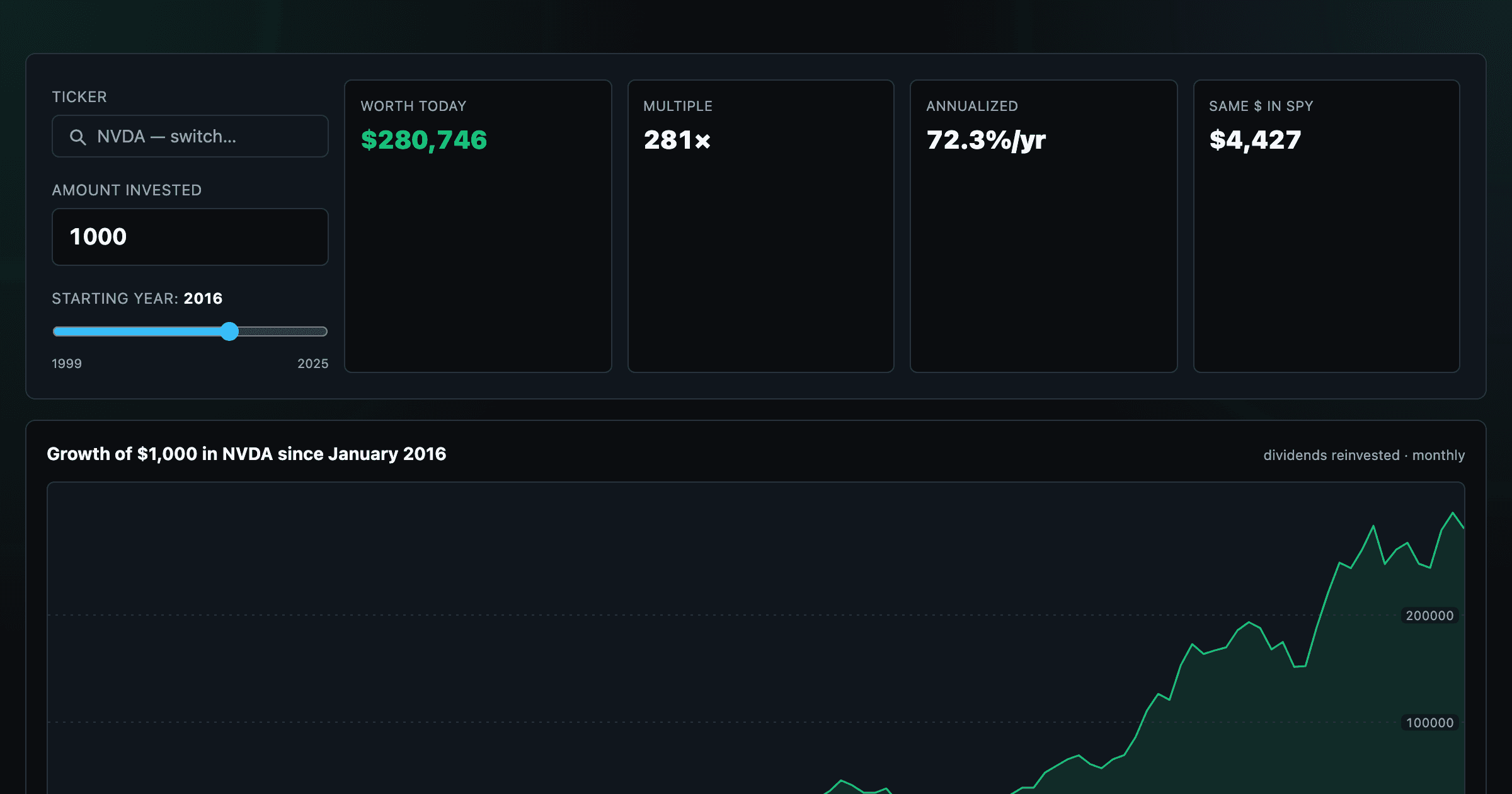
What $1,000 in any stock or ETF would be worth today.

Every S&P 500 company sized by market cap — color by return or valuation.
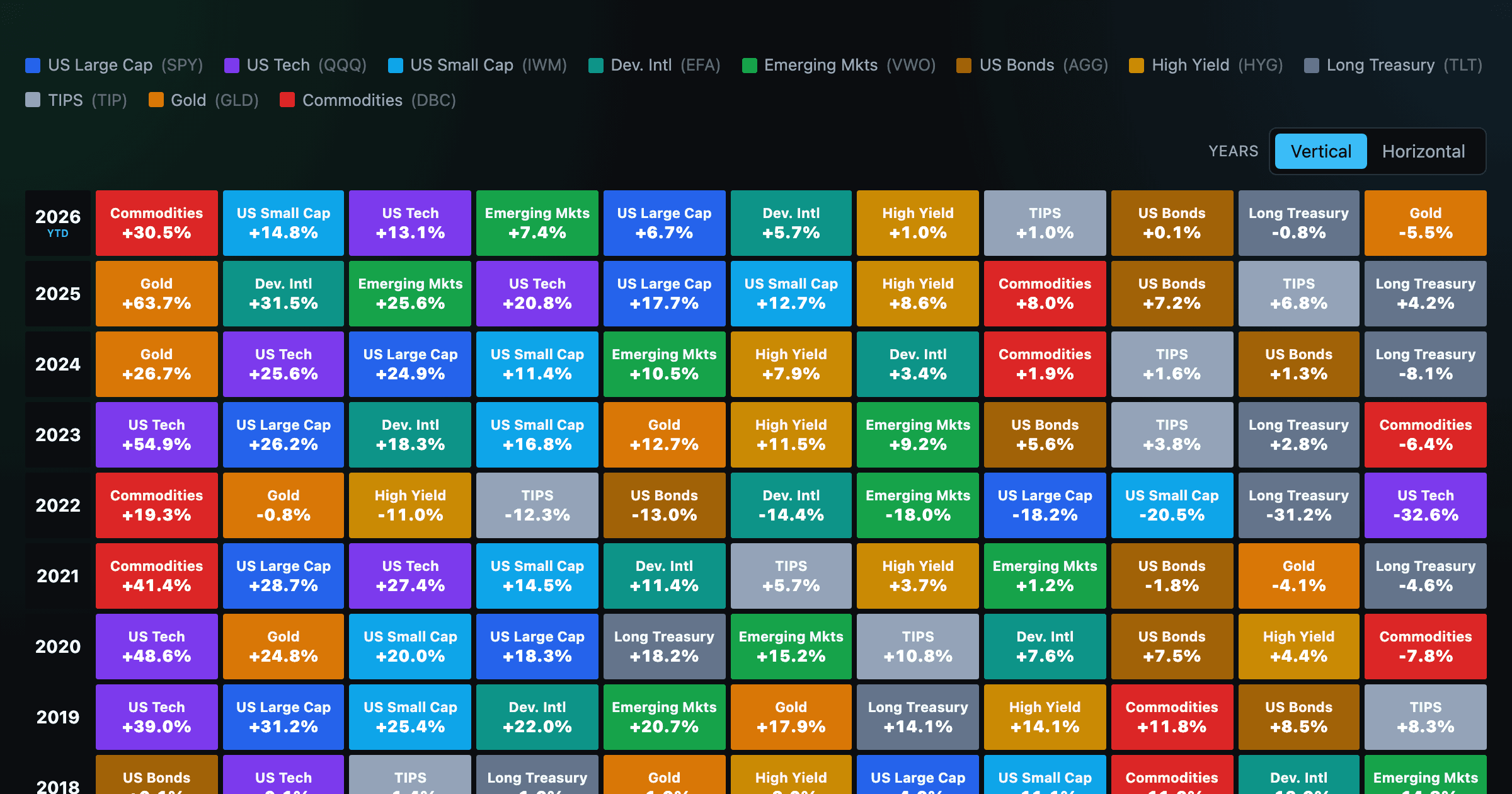
Asset-class returns ranked year by year — the Callan chart / asset allocation quilt.
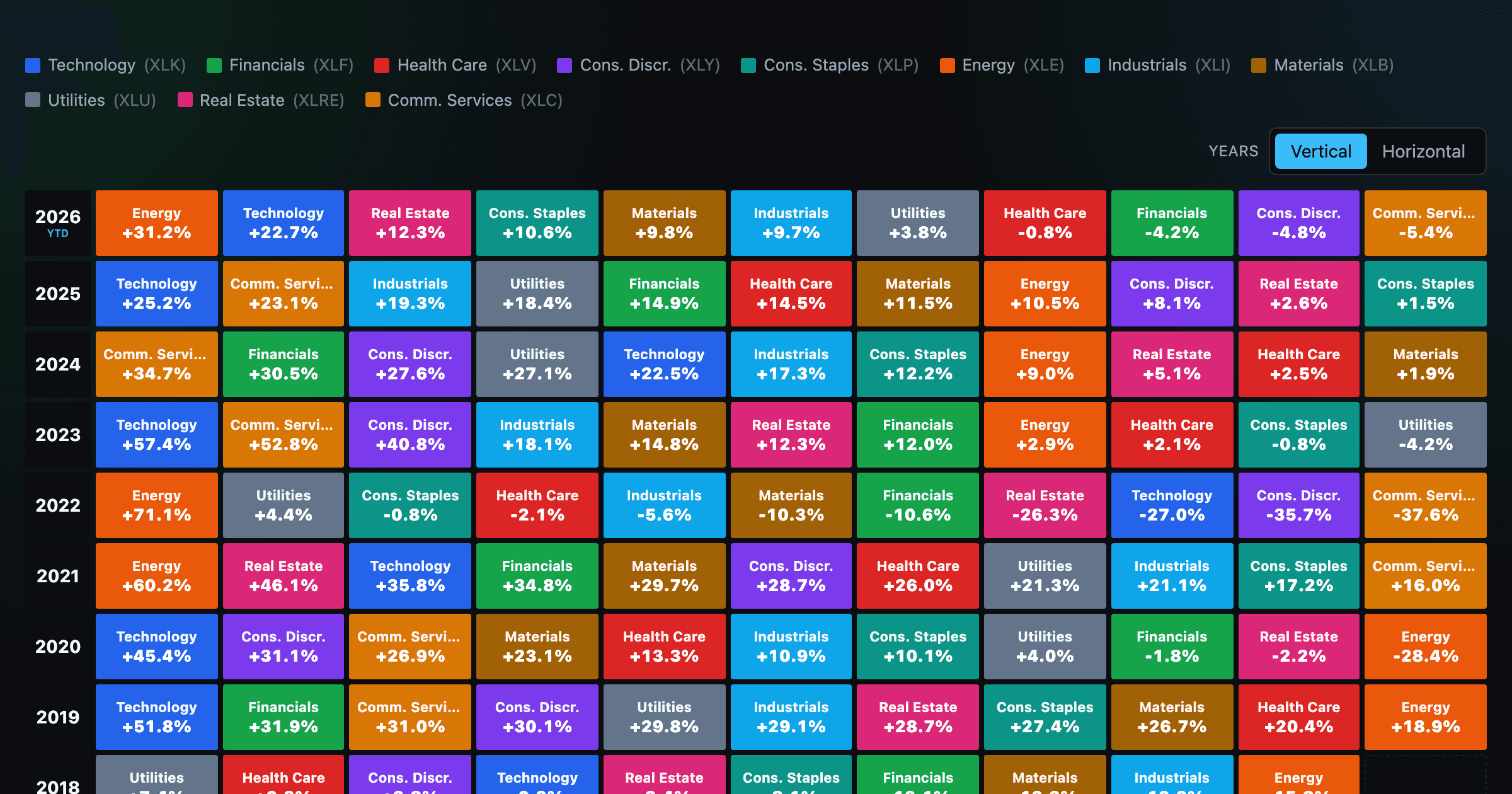
The 11 S&P 500 sectors ranked year by year — a sector quilt chart, back to 1999.
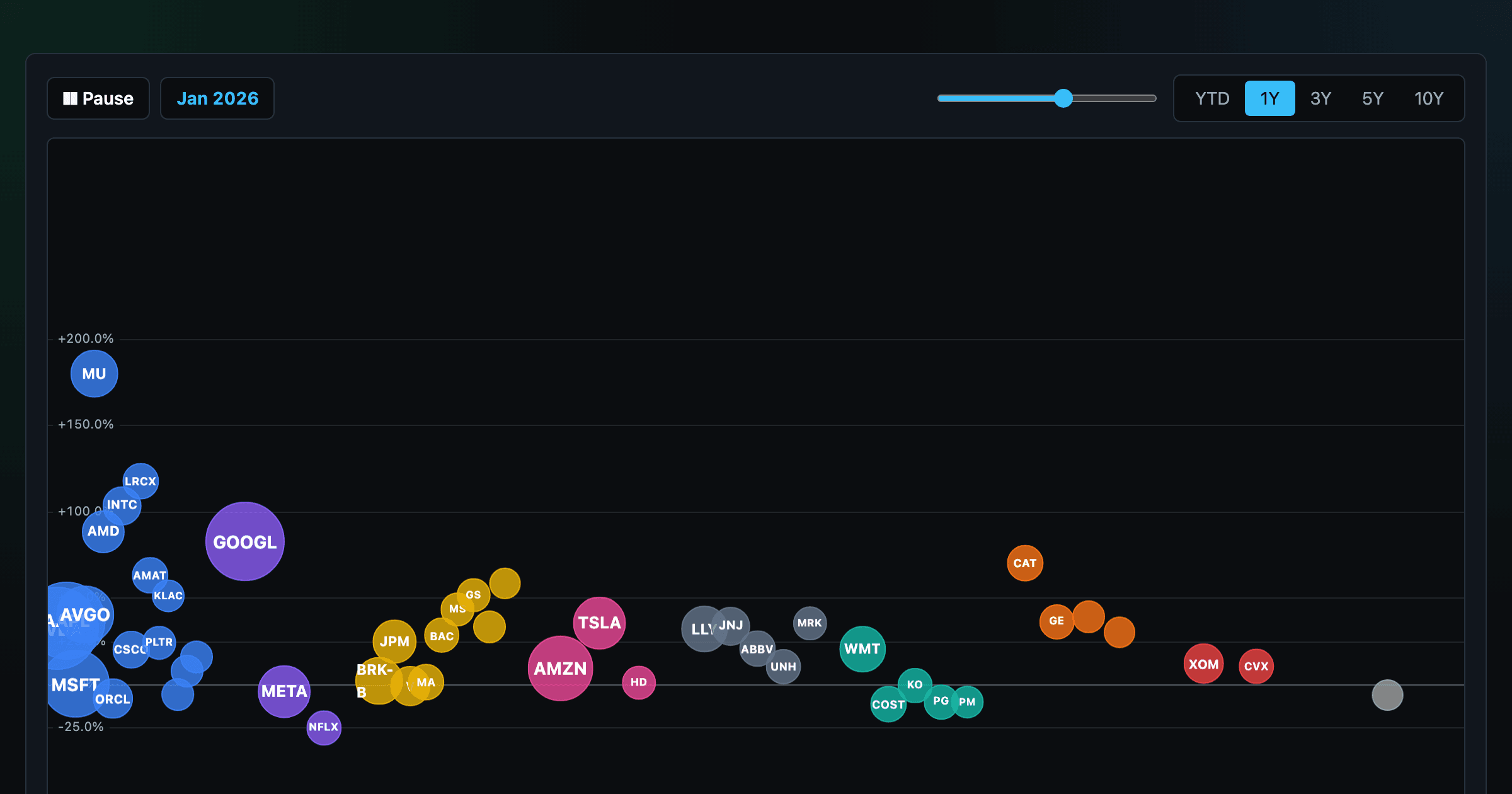
The biggest US companies as animated bubbles, rising and falling with their total return over time.
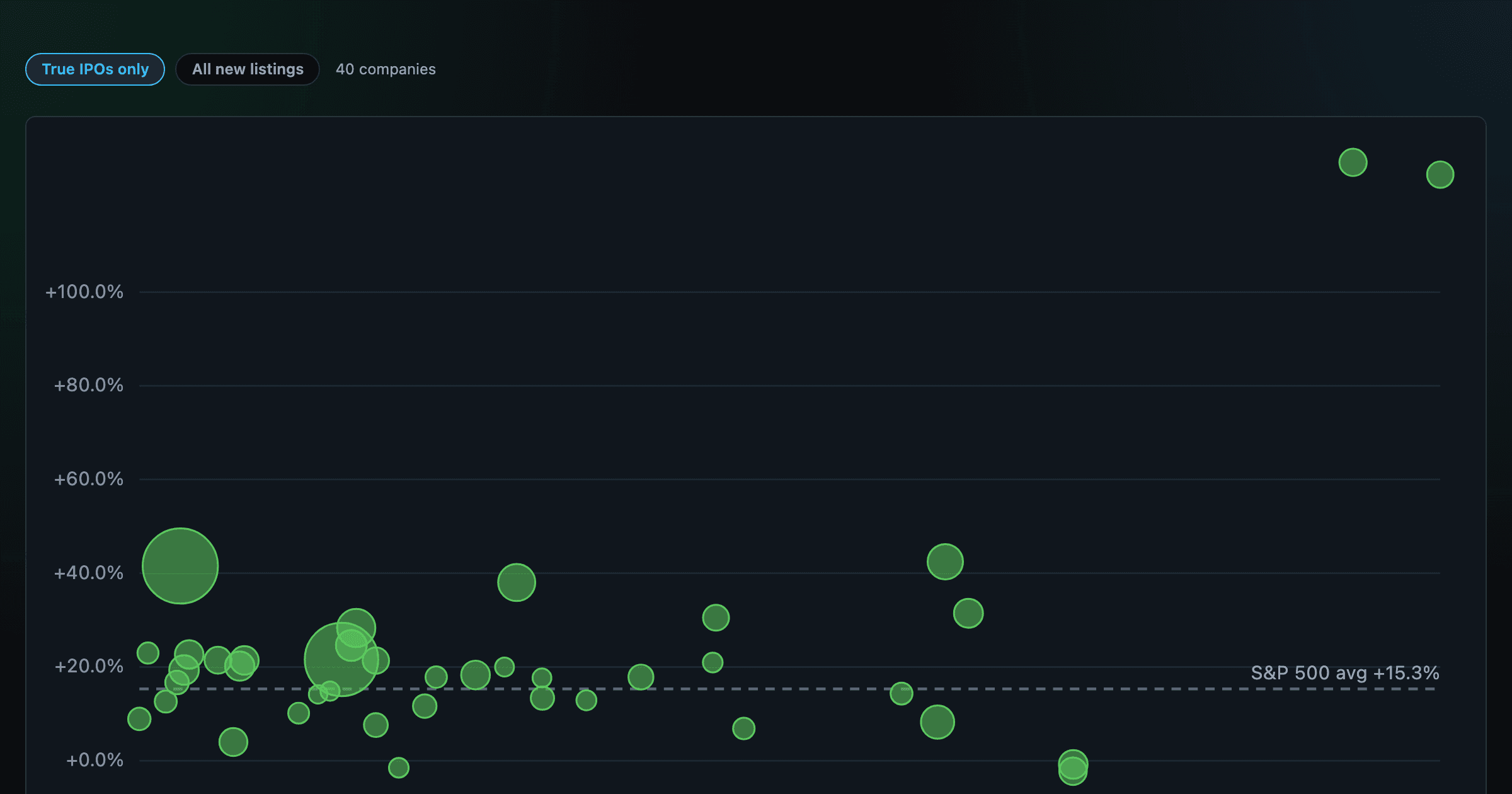
How recent stock-market debuts have performed since listing — annualized, vs the S&P 500, by IPO vs spin-off.
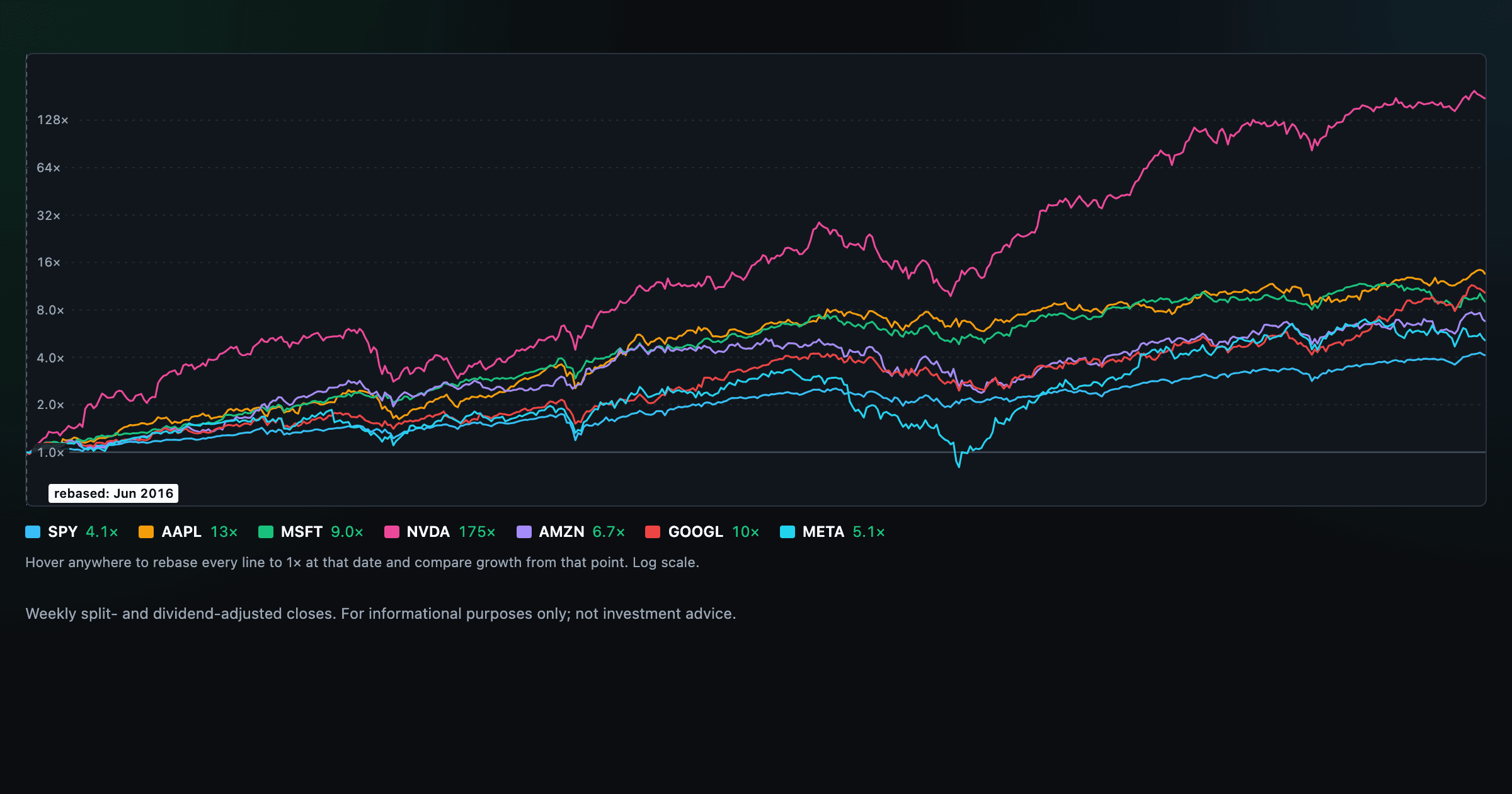
Compare megacaps vs the S&P 500, rebased to 1× at any date you hover.
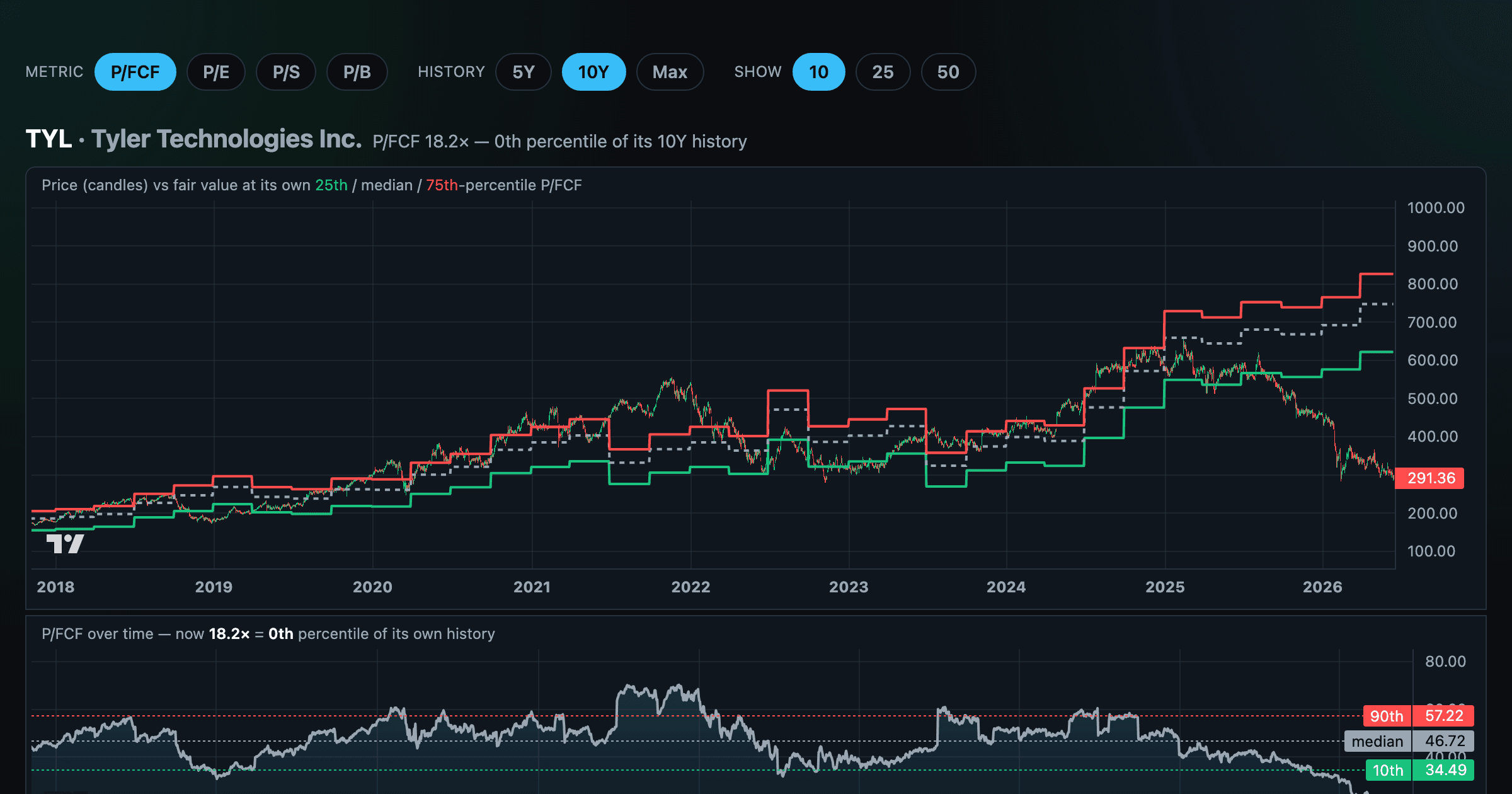
Stocks trading cheapest relative to their own P/E, P/FCF, P/S, or P/B history — with fair-value bands.
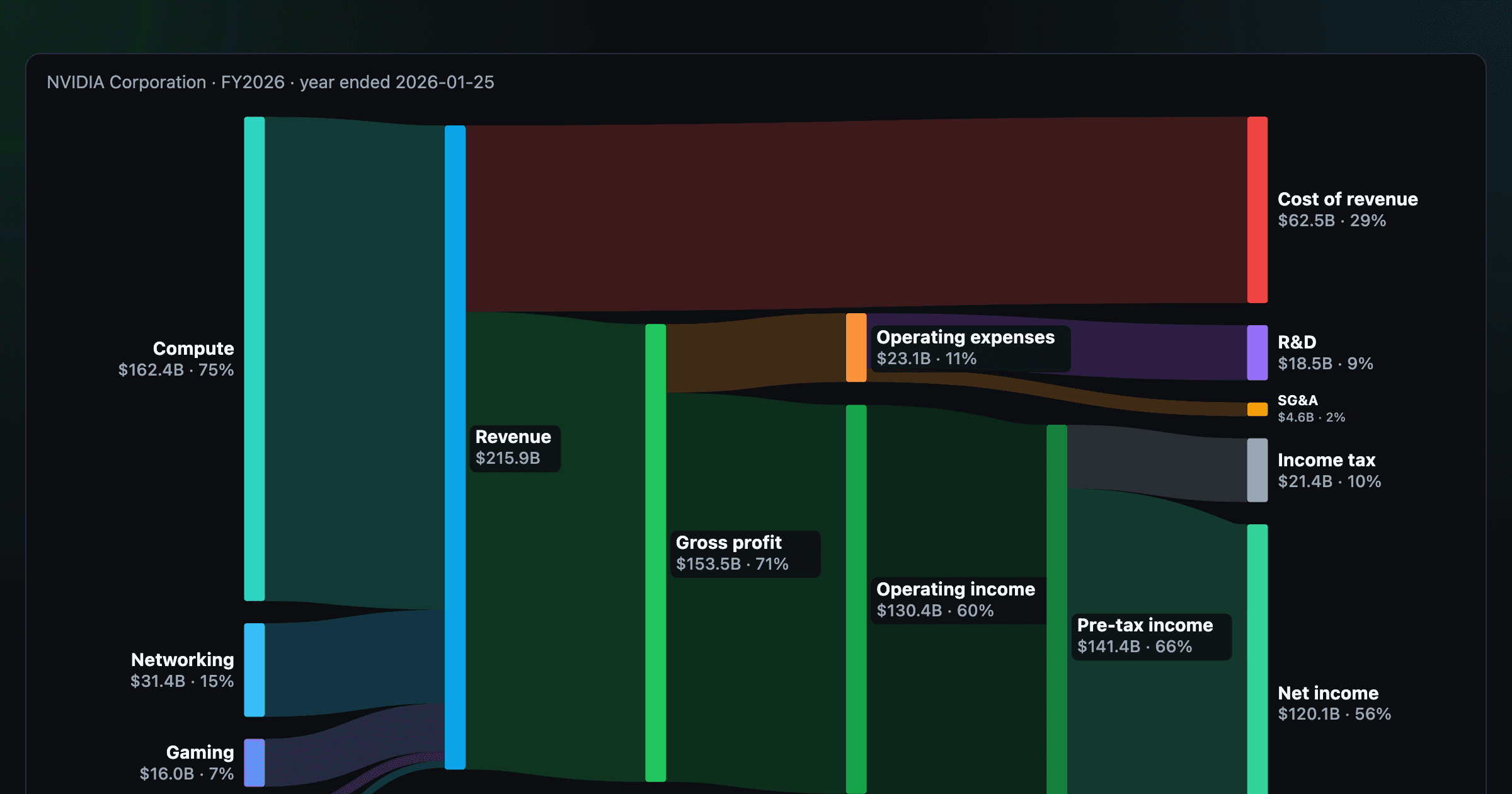
Follow a company's revenue through its income statement as a Sankey — costs, taxes, and profit.
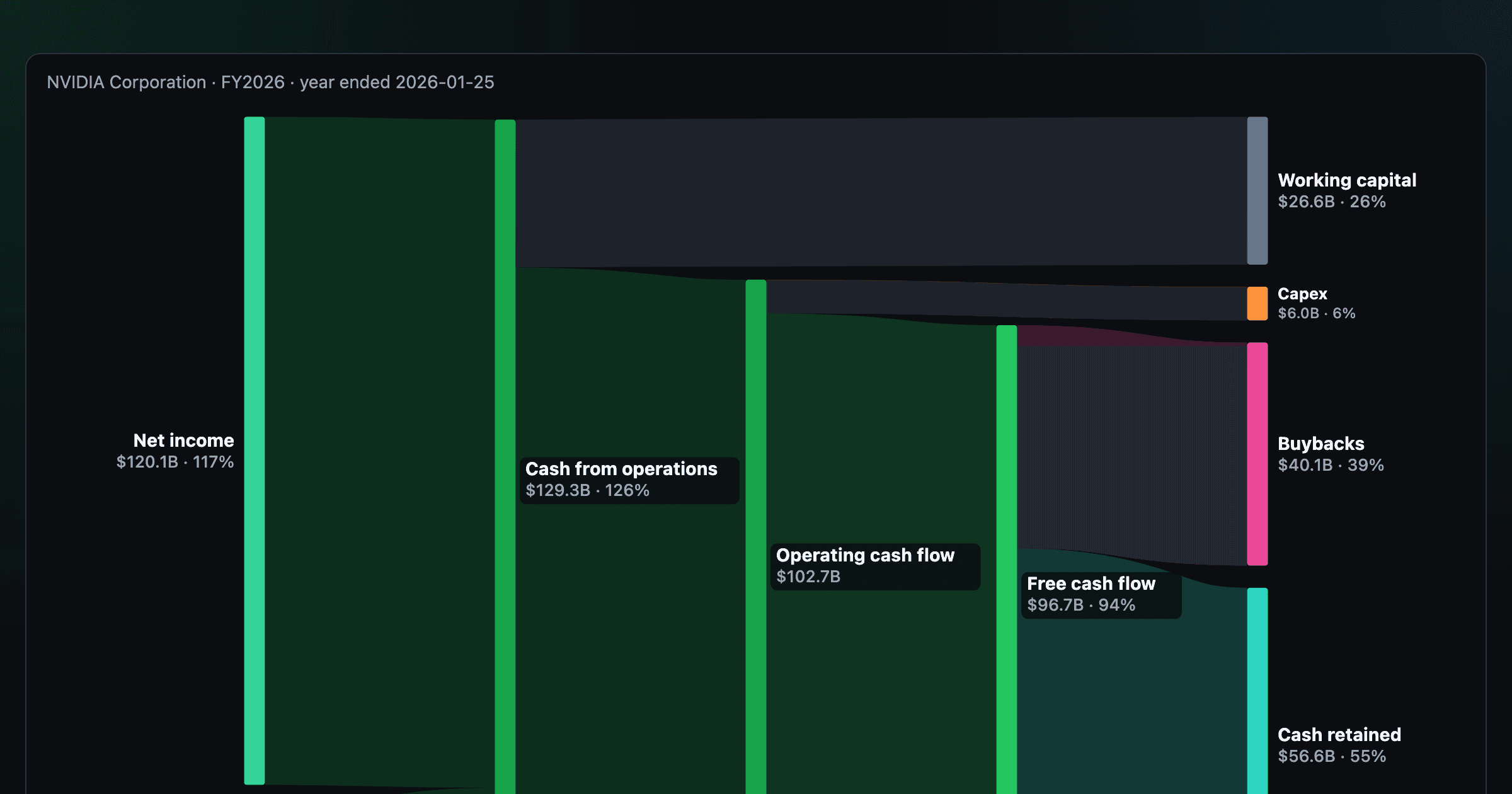
Follow a company's cash from net income through operating cash flow into capex, buybacks, and dividends.
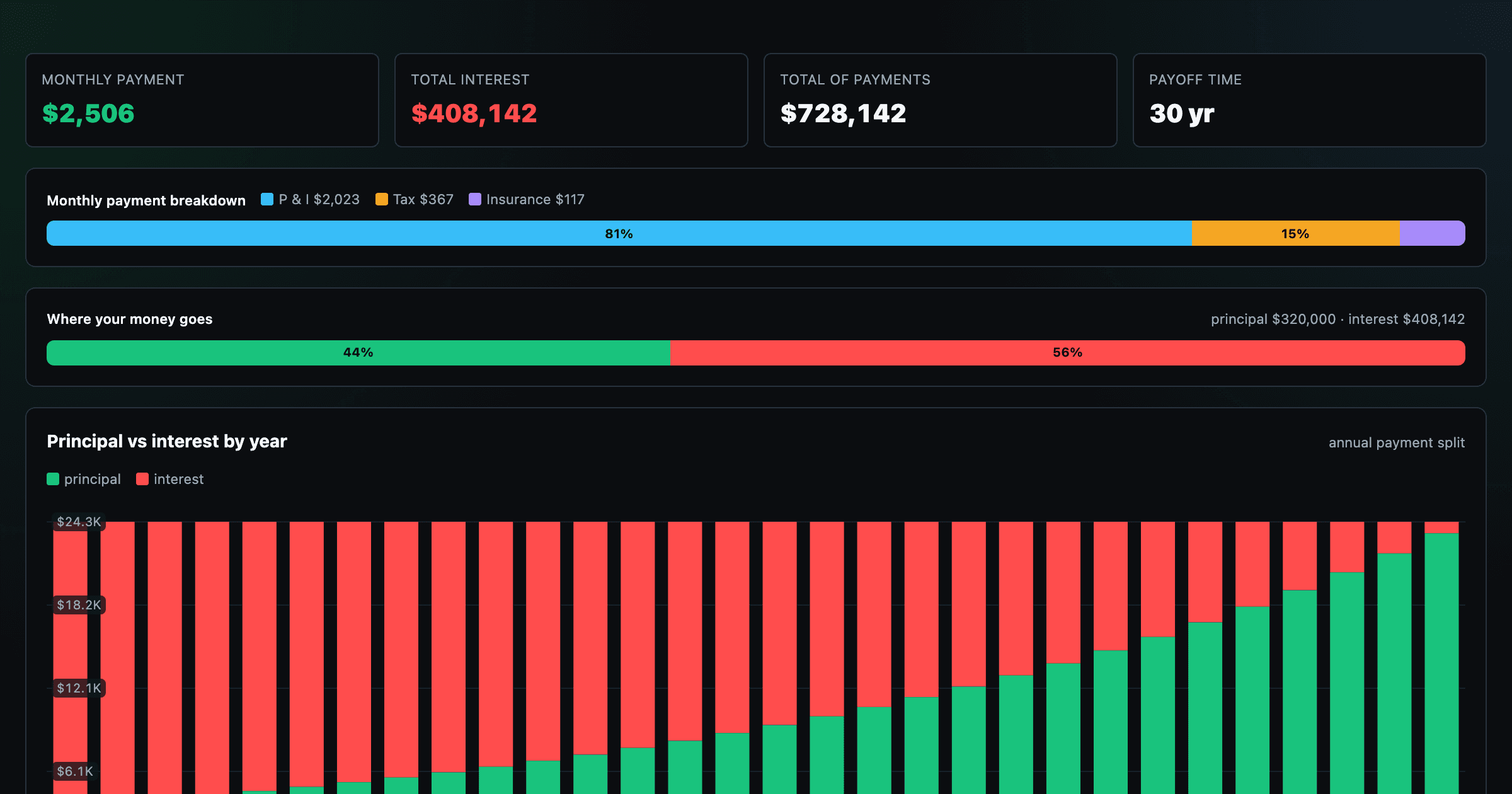
Monthly payment, principal vs interest by year, and the balance paydown — with extra-payment savings.
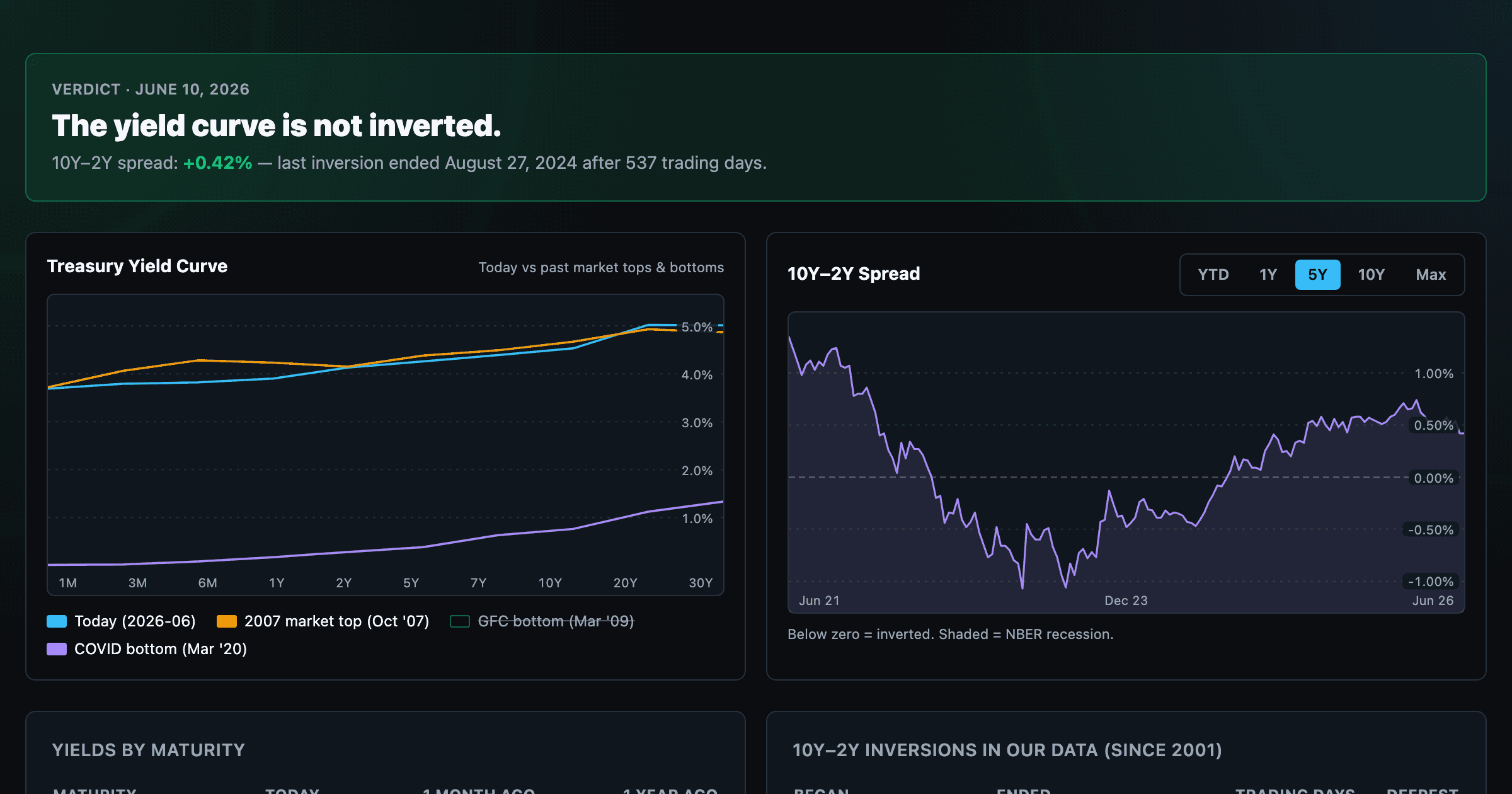
Live term structure, the 10Y–2Y spread, and every inversion episode.